Why commercial yards flood
Distribution yards, service roads and car parks collect a lot of water from large hard surfaces, and it all has to go through gullies, channel drains and carrier pipes to an outfall. When any part of that route is restricted, water backs up to the lowest point on the surface. Scotland’s rainfall makes small restrictions show up quickly.
The usual causes
In our experience the cause is usually one or more of these:
- Silted or blocked gullies, gully pots and channel drains
- A silted oil or petrol interceptor restricting flow through it
- Broken, displaced or collapsed carrier pipes, often under heavy traffic routes
- Root intrusion in runs near landscaping
- A blocked or failed flow control on attenuation
- An outfall that is surcharged, silted or has a failed flap valve
- Surface levels that have settled, so water no longer reaches the gullies
How a survey finds the cause
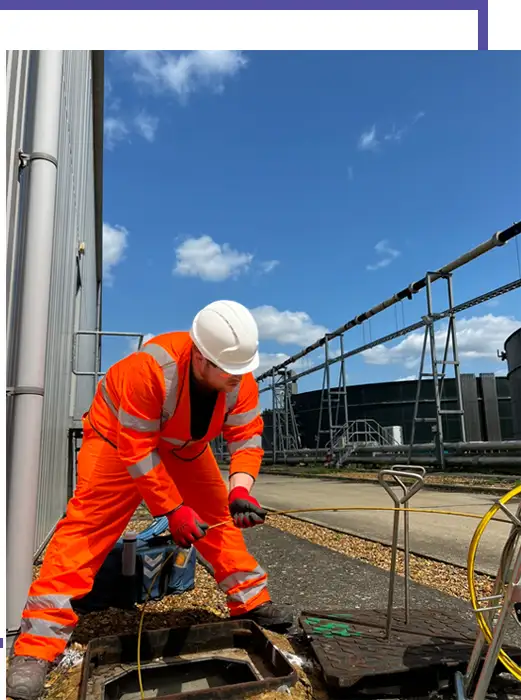
A drainage investigation traces the route the water should take, from the flooding point back through the gullies and carrier pipes to the interceptor, attenuation and outfall. The CCTV camera shows the condition of each length and where it is restricted, and silted runs can be jetted first so the camera can see. The result is a plan showing the cause, its position and depth, and what is needed to fix it.
On live sites we phase the survey around vehicle movements and shift patterns, and work nights or weekends where needed.
Preventing it happening again
Once the cause is fixed, a simple planned maintenance routine stops most yard flooding coming back: regular gully and channel cleaning, interceptor servicing by a licensed contractor, and a periodic CCTV condition survey of the main carrier runs.
- Clean gullies and channels on a schedule, more often in autumn
- Have interceptors emptied and serviced regularly
- Survey the main surface water runs every few years
- Keep a drainage plan so problems are found quickly
Need a drainage survey? Call 0345 548 5451 or email us with your site plan for a fixed quote.